

Tattoos have been part of human culture for thousands of years, serving as symbols of identity, spirituality, protection, rebellion, and remembrance. From ancient tribal markings to modern fine-line art, tattooing has evolved dramatically. However, when it comes to religion, tattoos remain a complex and often controversial topic.
While some faiths discourage or prohibit tattoos altogether, others view them as a personal or even spiritual choice. Understanding how different religions perceive tattoos can help individuals make informed decisions—especially when faith plays a central role in their lives.
This article explores how tattoos are viewed across major religions, including Christianity, Judaism, Islam, Buddhism, and other belief systems, outlining both supportive perspectives and religious concerns.
Tattoos in Christianity
Christian views on tattoos vary widely depending on denomination, cultural background, and personal interpretation of scripture.
Religious Perspective
The most frequently cited biblical passage regarding tattoos comes from Leviticus 19:28, which states:
“Do not cut your bodies for the dead or put tattoo marks on yourselves. I am the Lord.”
Some Christians interpret this verse as a direct prohibition, while others argue that it was a cultural law specific to ancient practices and not binding in modern Christianity. Many contemporary Christians believe the New Testament emphasizes intention and faith over physical appearance.
Pros
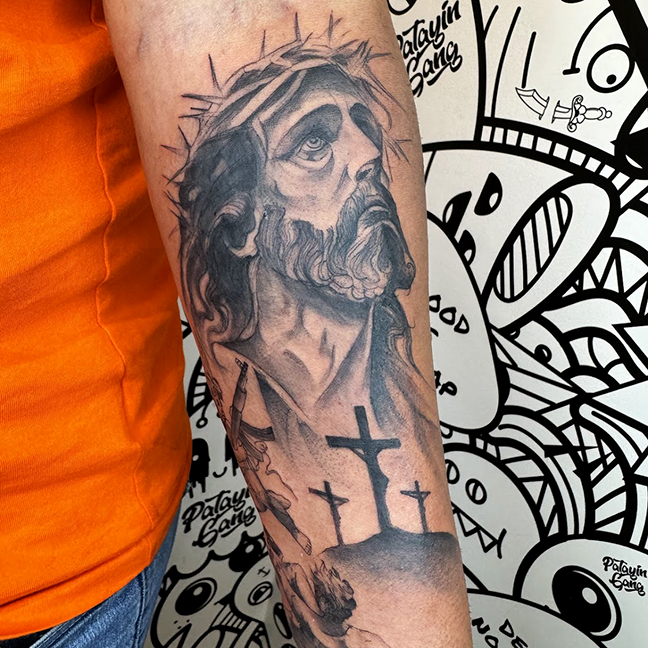
- Tattoos can be used to express religious devotion, such as crosses, scripture, or symbols of faith
- Some view tattoos as a form of testimony or evangelism
- Tattoos may commemorate meaningful spiritual experiences or loved ones
Cons
- Some Christians believe tattoos defile the body, which is viewed as “the temple of God”
- Tattoos may still be seen as rebellious or worldly in more conservative communities
Tattoos in Judaism
Judaism traditionally holds one of the strongest prohibitions against tattooing.
Religious Perspective
The Torah explicitly forbids tattoos, again citing Leviticus 19:28. The prohibition is rooted in the belief that the body is a sacred gift from God and should not be permanently altered.
This view has been reinforced historically, particularly in the aftermath of the Holocaust, where forced tattooing became associated with trauma and dehumanization.
Pros
- Some modern or secular Jews choose tattoos as expressions of cultural or personal identity
- Hebrew script or symbolic imagery may hold deep personal meaning
Cons
- Tattoos are generally considered a violation of Jewish law
- There is a strong belief that tattoos disrespect the sanctity of the body
- Traditional communities may strongly discourage or socially stigmatize tattooing
Tattoos in Islam
In Islam, tattoos are widely considered haram (forbidden) by most scholars.
Religious Perspective
Islamic teachings emphasize preserving the body in its natural state. Several hadiths report that the Prophet Muhammad condemned tattooing, stating that both the tattooer and the recipient are cursed.
Permanent tattoos are viewed as altering Allah’s creation, which is the primary reason for their prohibition.
Pros
- Some Muslims argue for cultural or symbolic interpretations, particularly with temporary tattoos (such as henna)
- Calligraphy and spiritual symbolism are sometimes expressed through non-permanent body art
Cons
- Permanent tattoos are widely viewed as religiously impermissible
- Tattoos may interfere with ritual cleanliness (wudu)
- Social and religious consequences may follow in conservative communities
Tattoos in Buddhism
Buddhism does not have a universal rule regarding tattoos, and views vary depending on tradition, culture, and individual belief.
Religious Perspective
Buddhism emphasizes intention, mindfulness, and detachment from the physical body. Tattoos are generally considered a personal choice rather than a moral issue.
In some cultures—particularly in Southeast Asia—sacred Buddhist tattoos (such as Sak Yant) are believed to offer protection, strength, or spiritual guidance when done respectfully.
Pros
- Tattoos may represent devotion, mantras, or spiritual teachings
- Some Buddhist tattoos are deeply ritualistic and meaningful
- No central doctrine explicitly forbids tattoos
Cons
- Excessive focus on body decoration may be viewed as attachment to the physical self
- Some Buddhists believe tattoos can distract from the path to enlightenment
Tattoos in Other Religions and Spiritual Beliefs
- Hinduism: Tattoos are generally permitted and often culturally accepted, especially symbolic or devotional designs
- Indigenous and tribal religions: Tattoos are frequently sacred, marking rites of passage, lineage, or spiritual protection
- Modern spirituality: Tattoos are often embraced as tools for self-discovery, healing, and empowerment
Final Thoughts: Tattoos, Faith, and Personal Choice
Religious views on tattoos range from strict prohibition to full acceptance, often shaped by history, culture, and interpretation rather than doctrine alone. While some faiths discourage tattooing as a violation of bodily sanctity, others allow room for personal expression and spiritual symbolism.
Ultimately, the decision to get a tattoo is deeply personal. For those who are religious, it’s important to reflect on:
- Personal beliefs and intentions
- Cultural and community context
- The spiritual meaning behind the design
Tattoos can be art, devotion, memory, or identity—but understanding how faith intersects with body art allows for more thoughtful and respectful choices.